
M.Zorigt: The Prosecution Service Aims to Introduce Electronic Case Files
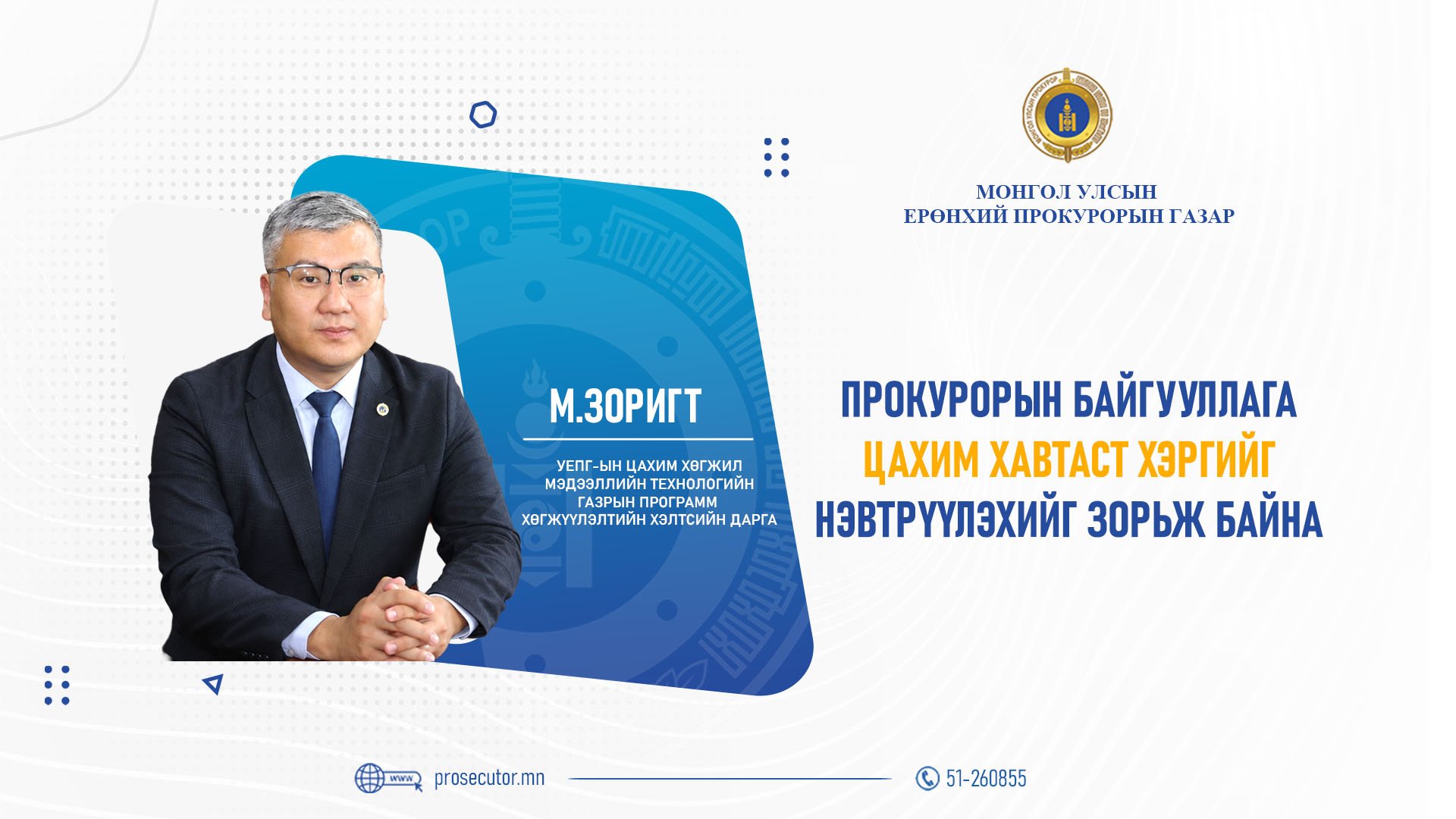
The prosecution service is introducing information technology into its operations and using it to improve work productivity. We spoke about this with M.Zorigt, Head of the Software Development Division of the Digital Development and Information Technology Department of the PGO.
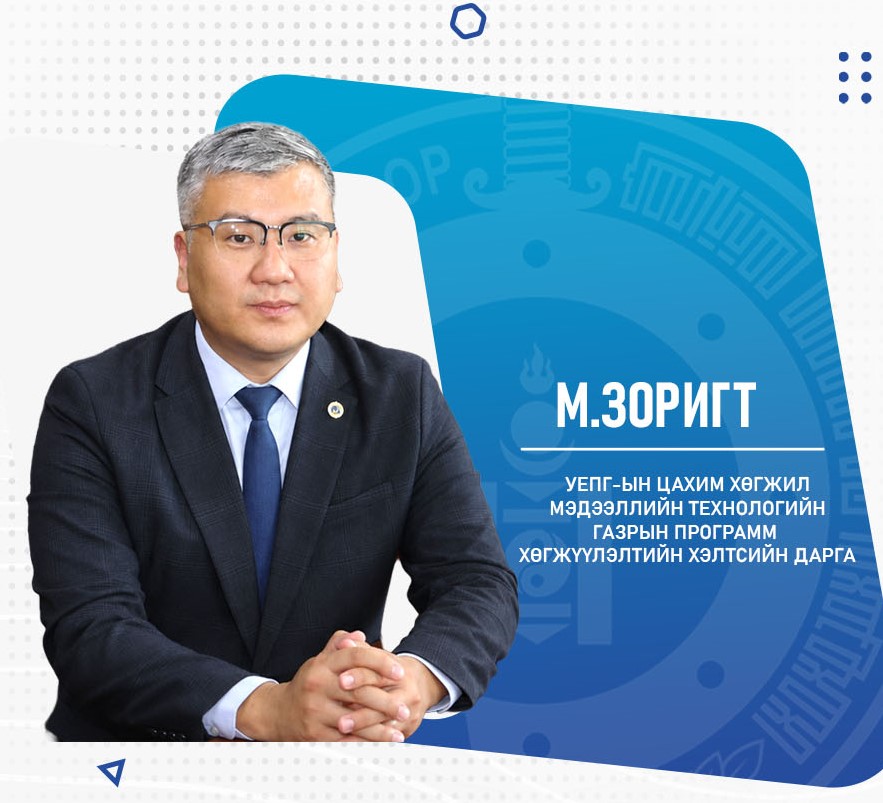
How is the prosecution service using information technology, including artificial intelligence, in its operations?
Today we are focusing on three areas. First, we are gradually digitizing prosecutorial supervision, which has traditionally been paper-based, and developing an integrated supervision system, an electronic archive and internal operational systems. Second, as the workload grows every year, we are turning our systems from mere data repositories into tools that genuinely ease the work.
The system gives advance warning of approaching deadlines for cases under supervision, and going forward we are focusing on time-saving solutions such as preparing the necessary forms and draft decisions and eliminating the need to re-enter the same information by hand. Third, since prosecutors work with large volumes of documents, we are exploring the potential of artificial intelligence in document drafting.
How will artificial intelligence be used in supervisory work?
We are testing capabilities such as extracting the necessary information from hundreds of pages of documents, finding similar cases and decisions, and classifying texts. However, we are approaching this with great caution.
Artificial intelligence is not a decision-maker but a tool that assists the prosecutor; the final decision, its grounds and the responsibility for it rest with the official concerned. Because case information is confidential, information security is our top priority.
What work are you planning in the near future?
The next major undertaking is the digitization of case files. Today, cases and materials are physically carried in paper form from investigators to prosecutors and from prosecutors to the courts, which, in addition to the cost in time and manpower, carries the risk of documents going missing or being damaged. Digitization does not simply mean scanning. It means that from the moment a case is opened, every document is compiled electronically and certified with a digital signature, and who viewed what, when, and what changes were made are fully recorded. This will make supervision faster, ensure the integrity of evidence, and make transfers between agencies electronic.
A working group has been established by order of the Prosecutor General, and the work is at the research stage. The challenge is that, as the volume of documents grows, solutions for the required storage and long-term electronic archiving are needed.
Нөгөө талаар энэ ажлыг зөвхөн прокурорын байгууллага дангаараа гүйцэтгэх боломжгүй. Мөрдөх байгууллага, Шүүх байгууллагатай нэг стандарттай, ижил бүтэцтэй хавтаст хэргийг таньдаг нэг системтэй болж байж амжилттай хэрэгжинэ.
Nationwide Rollout of the Integrated Infringement Registration and Information Database Has Made It Possible to Obtain Infringement Data Promptly from a Single System

Прокурорын байгууллага 2026 оны эхэнд “Зөрчлийн бүртгэл, мэдээллийн нэгдсэн сан”-г улсын хэмжээнд хэрэглээнд нэвтрүүлсэн. Энэ санд хэчнээн байгууллага нэгдэж, үйл ажиллагаандаа хэрхэн ашиглаж байна вэ?
While criminal cases pass through a relatively small number of agencies, infringement proceedings nationwide pass through around 11,000 authorized officials at some 900 organizations with 65 different functions. Managing such wide-ranging proceedings on paper has become impossible, both conceptually and in terms of oversight. That is why the need arose, first and foremost, to consolidate infringement data and create an integrated database.
Previously, the police recorded infringements in their own system, organizations such as the tax and customs authorities in their own electronic registers, and other organizations on paper or in files, and the ability to consolidate these was limited.
Commissioned by the Ministry of Justice and Home Affairs and the Prosecutor General's Office, and developed with the support of the Deutsche Gesellschaft für Internationale Zusammenarbeit (GIZ), it was rolled out nationwide from January 1, 2026. The essence of this database is that it creates an integrated repository in which all organizations authorized to handle infringement proceedings record their infringement information to one standard, under one classification and using the same forms.
Under the law, the prosecution service is responsible for compiling and consolidating nationwide infringement records and statistics. That is why we act as the main organizer of this database and provide methodological guidance to the authorized organizations.
There is a perception among the public that the infringement database is a single system of the prosecution service. Could you explain how this system works?
Энэ бол хамгийн их тайлбар шаарддаг асуулт. Зөрчлийн бүртгэл, мэдээллийн нэгдсэн сан нь ганц энэ системээс тогтдоггүй. Өөр өөр байгууллагын олон систем зэрэг ажиллаж байдаг. Нэг иргэний үйлдсэн зөрчлийн мэдээлэл тус санд бүртгэгдсэнээс хойш гурван үе шатыг дамжин шийдвэрлэгддэг.
Эхний үе шат - Бүртгэл: Зөрчлийг илрүүлж, шалган шийдвэрлэдэг эрх бүхий байгууллагууд буюу цагдаа, татвар, гааль, байгаль орчин, нийслэл, орон нутгийн эрх бүхий байгууллага зэрэг 900 орчим байгууллага бий. Эдгээр байгууллагын эрх бүхий албан тушаалтны шийтгэлийн хуудас, шийдвэр “Зөрчлийн бүртгэл, мэдээллийн сан”-д бүртгэгдэнэ.
The second stage – Reference sources: Information on individuals and legal entities is obtained from verified sources through the General Authority for State Registration, the vehicle registry and the KhUR data exchange system. This has eliminated errors and discrepancies such as one citizen being registered under two different names or registration numbers not matching.
Гурав дахь үе шат - Гүйцэтгэл, төлбөрийн хэсэг: Зөрчлийн бүртгэл, мэдээллийн нэгдсэн систем нь зөрчил болон торгуулийн мэдээллийг өгдөг. Тухайн торгууль Төрийн санд төлөгдсөн тохиолдолд төлбөрийн мэдээлэл ирж, системд зөрчлийн төлөв автоматаар өөрчлөгддөг. Өөрөөр хэлбэл, “төлөгдсөн” эсэхийг Прокурорын байгууллага гараар тэмдэглэдэггүй, Төрийн сангийн гүйлгээний баримт дээр үндэслэн систем өөрөө шинэчилдэг.
What changes and results have come about since the integrated infringement database began operating?
The biggest change is increased speed. With the database in operation, officials authorized to handle infringements can register complaints, reports and decisions from anywhere with an internet connection, obtain infringement numbers electronically, and submit requests in the course of proceedings, such as extending deadlines or obtaining approvals, electronically to the relevant officials for decision. This has produced the tangible result of reduced paper use.
Мөн зөрчлийн мэдээлэл нэг системээс бодитой гарах боломж бүрдсэн. Прокурорын байгууллага хууль тогтоомжид зааснаар улсын хэмжээнд зөрчлийн талаарх нэгдсэн бүртгэл, статистик мэдээг хариуцах үүргийг хүлээдэг. Зөрчил шалган шийдвэрлэх эрх бүхий албан тушаалтны шийдвэрлэсэн зөрчил бүрийн тоо, төрөл, шийтгэлийн хэмжээ, төлөлтийн байдлыг нэгтгэн, албан ёсны статистик болгодог. Нэгдсэн системтэй болсноор зөрчилтэй холбоотой мэдээллүүд бодит цаг хугацааны байдлаар гарч байна. Нэгдсэн системээс гарч буй статистик мэдээллүүд нэгдүгээрт бодлого боловсруулагчдын хувьд аль төрлийн зөрчил хаана, ямар улиралд, ямар давтамжтай гарч байгааг харж байж урьдчилан сэргийлэх арга хэмжээгээ чиглүүлдэг. Хоёрдугаарт, хууль тогтоогч нар тухайн зүйл заалт практикт хэрхэн хэрэглэгдэж байгаа, шийтгэлийн хэмжээ үр нөлөөтэй эсэхэд дүн шинжилгээ хийх боломжийг олгодог.
The number of infringements is increasing every year. According to the infringement data, which infringements are committed most often?
As of the first 8 months of 2026, a total of 5.6 million infringements have been registered in the system. Of the total of 151 billion MNT in fines imposed for these infringements, 78 billion MNT, or 52 percent, has been paid. The most frequently registered are violations of the Law on Road Traffic Safety, with 5.4 million registered since the start of the year. Other leading infringements include 79,000 cases of disorderly conduct in public places and more than 23,000 violations of the Law on Compulsory Driver Insurance.
How can citizens pay their infringement fines?
Зөрчлийн торгууль төлөх процесс гинжин холбоогоор ажилладаг. Эрх бүхий албан тушаалтан зөрчлийг шийдвэрлэж, шийтгэлийн хуудсыг нэгдсэн санд бүртгэнэ. Тухайн мөчид зөрчлийн торгох шийтгэлийн мэдээллийг Төрийн сангийн системд илгээж нэхэмжлэх үүснэ. Мэдээлэл E-Mongolia болон холбогдох сувгаар иргэнд очно. Иргэн торгуулиа цахимаар төлөх боломжтой. Төлбөр Төрийн сангийн холбогдох дансанд шилжиж, төлбөр хийгдсэн баталгаажуулалт ирснээр зөрчлийн системд тухайн зөрчлийн төлөв “төлөгдсөн” болж өөрчлөгдөнө.
If, however, the fine is not paid on time, grounds arise in the system, in accordance with the procedure established by law, for increasing the fine, restricting rights or moving to enforcement proceedings. The systems of at least four organizations are involved in this chain.
Since a delay in any one of them causes disruptions across all systems, this is a matter of cooperation. For information exchange, the system is connected with the National Police Agency and the Traffic Control Center, and for payments, with the State Treasury's integrated payment system, E-Mongolia and the KhUR system. Integration work is now under way to connect with the electronic system of the Judicial General Council.
There were earlier reports that the system had become overloaded with fine payments and that the fine payment service had been disrupted. Can we take it that things are now back to normal?
The Law on Infringements classifies some 1,500 acts and omissions as infringements. The most common form of liability for infringements is a fine. Fines account for about 90 percent of the penalties for infringements committed nationwide, and this penalty is mandatory in nature.
Therefore, the enforcement of fines has been moved to an invoice-based electronic format. As a result, system users can track the enforcement of penalties in real time without delay, and procedures provided by law, such as reducing or increasing penalties and restricting rights, have begun to be carried out without human intervention. In other words, the legal consequences now arise automatically depending on whether or not a fine has been paid.
Payment service providers also had to bring their operations into line with the requirements of the law and make the relevant changes. Until these changes were made, specifically, citizens were unable to pay fines imposed from January 10, 2026 onward through certain app-based services. It was not a matter of the system itself shutting down or fines becoming impossible to pay. Infringement fine payments are now proceeding normally.
Finally, what message would you like to share with the public?
Digitizing public services does not only mean making civil servants' work easier. It means that citizens will be able to view and check information concerning them at any time and have it corrected if it is wrong. We consider this the greatest benefit of digitization.
Therefore, I would ask citizens to actively check their information and to ask for clarification whenever they have doubts. If you believe any information has been recorded incorrectly, please contact the organization that made the decision. Since every action taken in the digital environment leaves a trace, it is possible to establish the true facts.
For the prosecution service, the digital transition is not a one-off project but an ongoing effort. We will continue to work to ease the work of our staff and to uphold the principles of being close to citizens, transparent and responsive.
- Thank you for the interview.