
G.Enkhmaa: The Majority of Infringements of the Law on Fauna Involve Illegal Transportation of Fish and Marmots
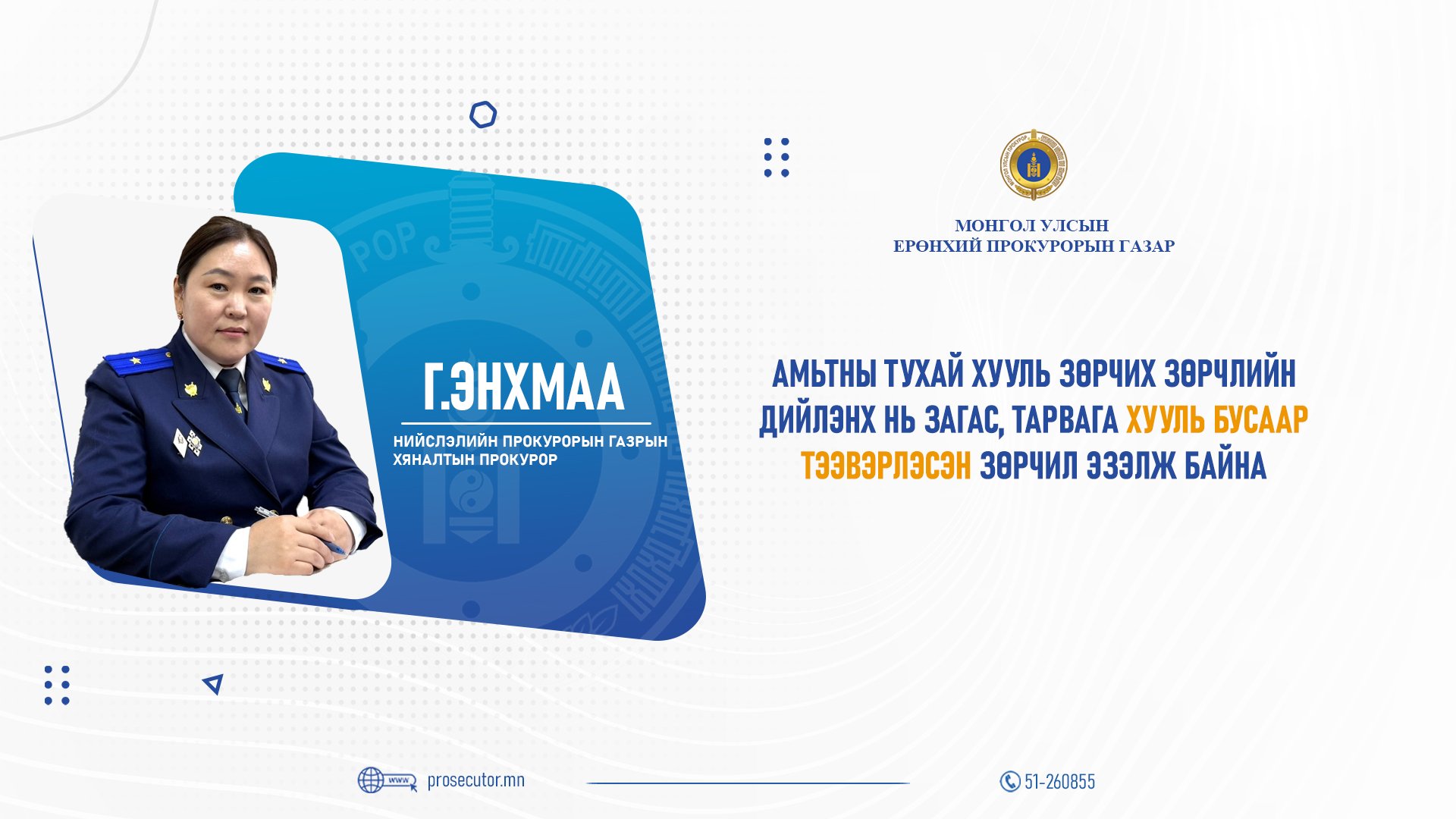
Нийслэлийн прокурорын газрын Зөрчлийн хэрэг бүртгэх ажиллагаанд хяналт тавих хэлтсийн хяналтын прокурор Г.Энхмаатай “Амьтны тухай хууль зөрчих” зөрчлийн гаралт, шийдвэрлэлтийн талаар ярилцлаа.
Нийслэлийн хэмжээнд Зөрчлийн тухай хуульд заасан Амьтны тухай хууль зөрчих зөрчлийн гаралт, шийдвэрлэлтийн талаар мэдээлэл өгөхгүй юу? Амьтны тухай хууль зөрчих зөрчлөөс ямар төрлийн зөрчлүүд Нийслэлийн нутаг дэвсгэрийн хэмжээнд зонхилон үйлдэгдэж байна вэ?

Нийслэлийн прокурорын газраас 2026 оны эхний 4 сарын байдлаар Нийслэлийн Байгаль орчны газрын эрх бүхий албан тушаалтны Зөрчлийн тухай хуулийн 7.6 дугаар зүйлд заасан “Амьтны тухай хууль зөрчих” зөрчлийг шалгасан 163 хэрэг, материалд хяналт тавьсан. Энэ нь өнгөрсөн оноос 69 буюу 73.4 хувиар өссөн үзүүлэлттэй байгаа юм. Дээрх 163 зөрчлөөс агнуурын бүс нутгаас бусад газарт, амьтныг агнах хориотой үед, эсхүл хориглосон хугацаанд амьтныг барьсан, агнасан, тээвэрлэсэн зөрчил 110 буюу зонхилон үйлдэгдсэн байна.
In most cases, since the commission of the infringement is clear and the person concerned voluntarily admits to committing it, the infringement is examined under a simplified procedure within 5 working days and resolved by imposing a penalty; 147 infringements were resolved in the simplified manner. Infringement case inquiries were opened for 13 infringements.
Since the beginning of the year, 262 marmots, 602 fish, 14 wolves, 4 gazelles, 3 each of wild boars and foxes, 2 each of corsac foxes and owls, 1 badger, and 1 deer antler, among others, have been confiscated from citizens involved in the above infringement cases and materials.
What legal liability applies if one commits an infringement of the Law on Fauna? How much has been recovered as compensation for damage caused to the environment as a result of the infringements?
For individuals and legal entities found to have violated the Law on Fauna, in addition to confiscating the items used to commit the infringement and the property and income obtained illegally, and recovering the damage caused and compensation, a fine is imposed in the amount specified in the Law on Infringements. In general, depending on the infringement committed, the law provides for a fine of MNT 150 thousand to MNT 1 million for individuals and MNT 1.5 million to MNT 10 million for legal entities for violating the Law on Fauna.
Түүнээс гадна амьтны аймагт учирсан хохирлыг Байгаль орчныг хамгаалах тухай хуулиар тухайн амьтны экологи– эдийн засгийн үнэлгээг хоёр дахин нэмэгдүүлсэн хэмжээгээр тооцож, зөрчил үйлдсэн иргэн, хуулийн этгээдээр нөхөн төлүүлдэг.
For example, the ecological and economic valuation of 1 marmot is MNT 410 thousand. Calculated at twice this amount, it comes to MNT 820 thousand.
As you may know, on January 30 of this year, an infringement occurred in the limited-use zone of Nukhtiin Am in the Bogd Khan Mountain Strictly Protected Area, in the territory of the 23rd Khoroo of Khan-Uul District, where a red deer got caught and died in a non-standard fence built by a legal entity using the land. As a result of this infringement, damage of MNT 25.4 million was caused to wildlife, and it was decided to dismantle the non-standard fence, partially revoke the land use right, and recover the damage and compensation from the legal entity that built the non-standard fence.
In the first 4 months of 2026, of the MNT 258 million in damage and compensation incurred as a result of infringements of the Law on Fauna, MNT 127.7 million, or 49.4 percent, has been compensated.
Although there are legal regulations, why do citizens become involved in this type of infringement?
Нэг үеэ бодвол иргэд ан агнах, загас барих гэрээ, тусгай зөвшөөрөлгүйгээр амьтныг агнах, ашиглах, барих нь хууль бус гэдгийг мэддэг болсон. Гэсэн хэдий ч энэ төрлийн зөрчил буурахгүй байгаа нь зөрчилд холбогдсон иргэдийн ухамсартай шууд холбоотой байна. Агнуурын бүс нутгаас бусад газарт буюу хот суурин газарт тарвага, зурмын түүхий мах, нойтон арьсыг оруулахыг хориглодог. Гэтэл Амьтны тухай хууль зөрчсөн зөрчлийн дийлэнх нь нийслэл хот руу тарвага тээвэрлэсэн зөрчил байдаг. Энэ төрлийн зөрчилд холбогдсон иргэд “хүн бэлэглэсэн, эмчилгээнд хэрэглэх гэж байсан, эсхүл идэх зорилгоор авч явсан” гэдэг бол зарим хэсэг нь “хүний дайвар ачааг авсан, тарвага гэж мэдээгүй” гэх зэргээр тайлбарласан байдаг.
What measures do citizens need to take to prevent the above infringements?
The majority of infringements of the Law on Fauna involve illegally bringing fish and marmots into cities and settlements. In particular, there are cases of fishing during the spawning season.
The Law on Fauna clearly specifies the periods during which animals may not be hunted or captured. For example, hunting and capturing for household and special purposes is prohibited for roe deer, white-tailed gazelle and wild boar from December 1 of each year to August 31 of the following year; for sable, stone marten, raccoon dog, fox, Pallas's cat, tolai hare and brown hare from February 11 to November 20 of each year; for squirrels and marmots from October 16 of each year to August 20 of the following year; for Darkhad whitefish from August 1 to October 20 of each year; for fish of Buir Lake from May 15 to August 1 of each year; for omul from August 30 to October 30 of each year; for sturgeon from September 5 of each year to January 30 of the following year; for Altai osman from June 15 to August 31 of each year; and for other fish from April 1 to June 15 of each year. Therefore, care should be taken not to hunt or capture animals during the above periods.
In addition, it is necessary to avoid becoming involved in infringements by not transporting other people's parcels if they contain prohibited animals or other prohibited items, and by recording the relevant information of the person sending the parcel and the person receiving it. It is also worth considering whether the use of animal raw materials and organs for medical treatment is scientifically justified.
In conclusion, I call on everyone to understand that this world is not meant for humans alone and to take an active part in the cause of protecting animal rights.